by Aileen Tran
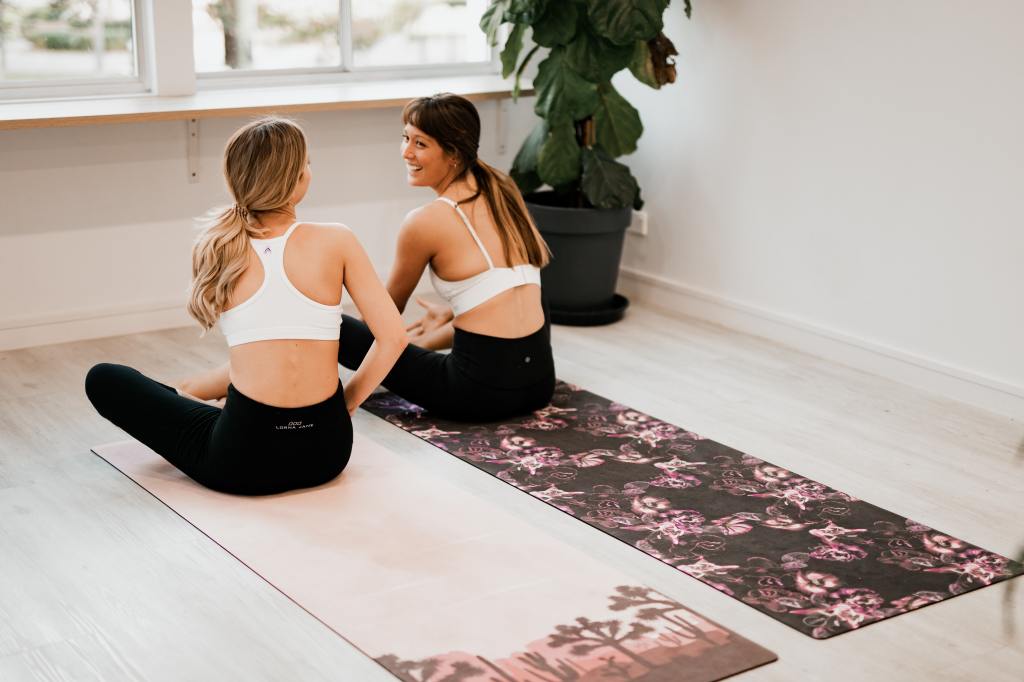
When Malaika Bonafide suffered a seizure and landed in the hospital, the doctors provided no clear explanation. A skeptic of modern medicine, she decided to take a more holistic route and dedicated herself to the practice of yoga. She was hooked.
Years later, she is symptom free. But being a fuller-bodied Black woman among a sea of thin white women, Bonafide soon realized that her mind-body haven was not so much a refuge but a place where she had to disassociate from her identity.
Although yoga in western countries has transformed into a “white phenomenon,” it certainly didn’t start off that way, said Harvard University Public Health professor Jarvis Chen.
This shift stems from “the yoga business landscape in terms of how yoga has grown as an industry and who picked up on yoga in this country,” Chen said.
Athleisure retailers like lululemon or Alo Yoga offer leggings priced up to $138, while a membership at chains like CorePower yoga can cost up to $175 monthly. Dropping in on a single studio class is the most cost-effective option for a casual practitioner, but even then a pass is $28.
Becoming a yoga instructor is expensive. In order to receive the most basic level of certification, a yoga teacher is required to complete at least 200 hours of training, 30 hours of “Continuing Education” every three years, and pay an annual membership fee. All together, training and membership fees can cost anywhere from $1,000 on the lower end, and up to $5,000 for higher-level certification.
While certification presents an economic and temporal barrier to those who want to become teachers, the salary of an established instructor poses another issue.
Jessica Young Chang is a 41-year-old certified yoga instructor from Chicago. Even when she taught yoga full-time, she made less than $20,000 a year.
“I was and still am fortunate enough to have a spouse who has a great job that has benefits like health insurance and life insurance,” said Young Chang. “So his work life made it possible for me to do that kind of work.”
Young Chang’s situation is a common one—because of its unsustainability, teaching yoga is usually a part-time job. As a result, only a certain group of people have the time and money to dedicate themselves to the craft.
All these factors have resulted in yoga becoming known as an “elite practice,” said Boston University Professor of Sociology Neha Gondal.
“And we know the way income distributions are in the United States, elite basically becomes white because a large section of resources are unevenly distributed favoring whites, elite Asians, and certain other segments of society,” said Gondal.
According to a study, 85.5% of American yoga teachers are women and 77% are white—while Black or African Americans make up less than 6% of the population.
Because a large majority of yoga practitioners tend to be thin-bodied white women, the instructor pipeline has seen the proliferation of the same population, which indirectly and directly excludes communities who don’t fit that mold.
Social networks also tend to be homophilous, meaning that individuals usually associate and bond with people who share similar characteristics. Social networks are homophilous in terms of things like socioeconomic status or cultural taste, but most widely by race. As a result, information becomes localized.
As yoga became more popular in white spaces, it became coded as a “white” thing, said Gondal.
Once something becomes coded as white, it becomes difficult to spill over into other communities. This cultural differentiation is what keeps people from trying new practices.
Even when POC are comfortable practicing yoga, they usually find themselves to be “the only color in the room,” Bonafide said.
Although Bonafide is a certified instructor with 1900 hours of training under her belt, she still feels unwelcome when she practices in studios.
“Sometimes I would feel ostracized in the room and really alone, not being engaged in conversation [with the other people],” Bonafide said.
Because of the value yoga had on her healing journey, Bonafide was forced to cope with feeling alienated from the inhabitants of the mats around her.
Mainstream yoga spaces have shifted from a spiritual and meditative focus toward a more intense physical practice. This new-age bodycentrism has resulted in various inclusivity issues, especially in terms of language and body types.
The communities who could benefit most from yoga practices aren’t able to access it as a result, said Cal State East Bay Sociology professor Amara Miller, whose research focuses on inequalities in the yoga industry.
“It can provide a lot of peace for people who’ve been through a lot of trauma or experiences with marginalization or oppression or discrimination,” Miller said. “That type of enlightenment and that peace that comes from it can be especially powerful and especially healing.”
Yoga could also benefit populations that are at-risk for cardiovascular diseases, a majority of which are BIPOC with less access to healthcare.
“Things like meditation stimulate the vagus nerve which helps synchronize the brain, heart, and gut,” said Boston University Psychological and Brain Sciences professor Robert Reinhart. “It’s been able to show significant drops in blood pressure [and stress.]”
Disadvantaged communities not only face inequities due to environmental factors like housing and food instability, but they are systematically excluded from yoga’s health benefits due to lack of representation.
Teaching practitioners to be more mindful of inclusive language, as well as increasing the amount of BIPOC instructors teaching in their communities may be able to help with inclusivity. However, at its core, the industry has been built on oppression and exclusion.
According to Miller, the only way to truly increase equity is to scrap the exploitative model of western yoga and replace it with a more holistic interpretation of what yoga really is.
“What does inclusion mean when the industry itself is so deeply flawed?” said Miller.
 Aileen Tran